










Parallels transitions to a subscription model and increases CLV by 11%.






Our solutions make it easy to maximize customer lifetime value.
Cleverbridge Growth Engine
Our platform enables your sales team to focus on higher margin efforts by providing insight into your customer health score and probability of churn. By automating your low-complexity revenue opportunities we help minimize the time and effort required from your team to reach growth goals.

E-commerce for B2B
Gain a competitive advantage with carefully crafted, customer-centric B2B e-commerce solutions. Serving global B2B customers can be challenging. We provide the tools and the know-how to boost revenue across the board and deliver a great B2B customer experience that caters to the business-specific needs of your customers.

E-commerce for B2C
You want to acquire new B2C customers globally and retain and grow your subscriptions. B2C e-commerce growth is all about providing superb buying experiences. Our B2C eCommerce solution supports a wide range of pricing models, billing scenarios, and B2C-specific payment methods in the subscription economy so you provide every customer with a convenient, customized, and seamless experience.

Global tax & compliance
We know how complicated e-commerce compliance can be when it comes to regulations around taxation, data privacy, and security — as well as how fines for non-compliance can affect your bottom line. From tracking global tax regulations to providing tax-compliant invoices for your customers, Cleverbridge will help you stay compliant and expand your business into 240+ markets.

Renewal automation
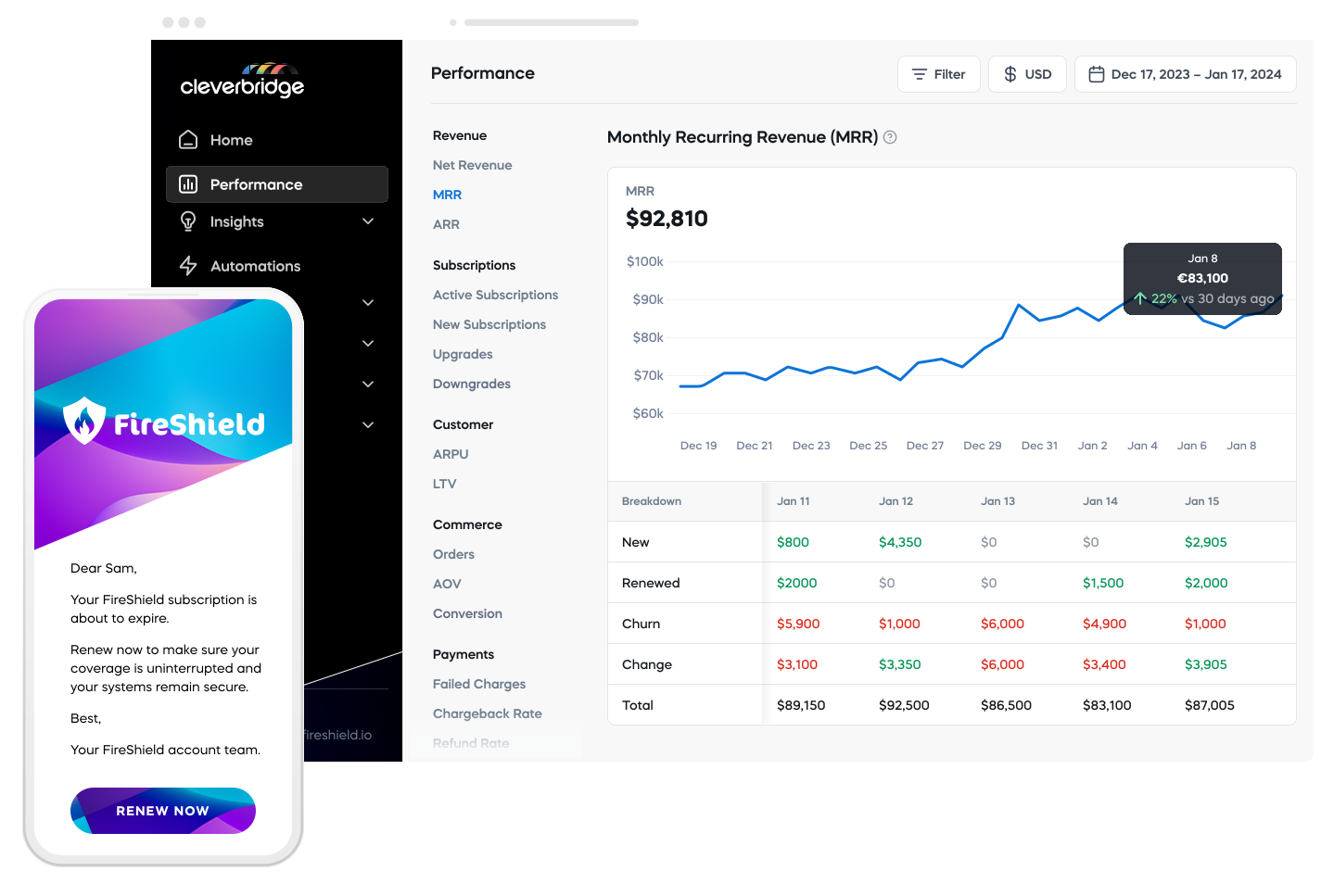
Renewal automation is baked into our subscription engine. This helps ensure your customers renew on time, helps you grow revenue, and maximizes your customer lifetime value while driving cost efficiencies. Our team sees average increases of +10% when implementing our renewal automation cadences with B2B & B2C clients.

Customer lifetime value
In today’s ultra-competitive SaaS environment, there’s a constant focus on growing recurring revenue to generate a sustainable growth plan. One of the keys is maximizing your customer lifetime value (CLV). When you increase your CLV, you generate a greater ROI on your cost per acquisition and help build a more profitable business.

Digital buying experience
We empower our partners to transform their processes to provide the rich, tailored digital experience B2B buyers expect without costly and time-consuming changes. We help you effectively gather data customer data and use machine learning to inform the customer journey to provide better experiences at the right time, with the right message, to the right person — ultimately reducing customer churn and maximizing customer lifetime value with no additional headcount.

Conversion rate optimization
We analyze your customer journey to identify opportunities to increase conversion rates, reduce churn, and optimize average order value.

Digitally enhanced selling
Sales success requires providing the marketing and sales team with the right tools for pipeline management, automating sales processes, and managing the digital buying experience from start to finish.

Our toolbox
We provide all of the tools needed to support your operations, marketing, and controlling. In addition, we enable your customers for self-service, providing the ability to manage their subscriptions, preferences, and personal data all day, every day. Get a complete view of all KPIs and steer your e-commerce business end-to-end in one place with Cleverbridge.

Enabling growth without added headcount.
Your success is our success. This way of working is baked into our collaboration and as a result, you can count on us to always have your best interests at heart.

"Since migrating its renewal business to the Cleverbridge platform, SmartBear has grown its online sales by 4x and doubled its renewal sales via eCommerce. After seeing this significant success in a short period of time, SmartBear is continuing to drive more of its business — both new and renewal — through the Cleverbridge solution."

"Cleverbridge's support in quickly adapting their tools and features to the specific integration with Avira led to improved customer experience as well as increased conversion and retention rates. We appreciate all their work and dedication, which contributes to Avira’s achievements."

"With Cleverbridge as our partner, our team can spend less time on paperwork and more time building relationships. Thanks to the integration, our CRM system is always up to date, allowing for a better and more dynamic understanding of our business."